

Rural Community Immigration Pilot programe
- Category:Immigration News
- Country:Canada
- View Counts:346
- Published on:21-Jan-2026
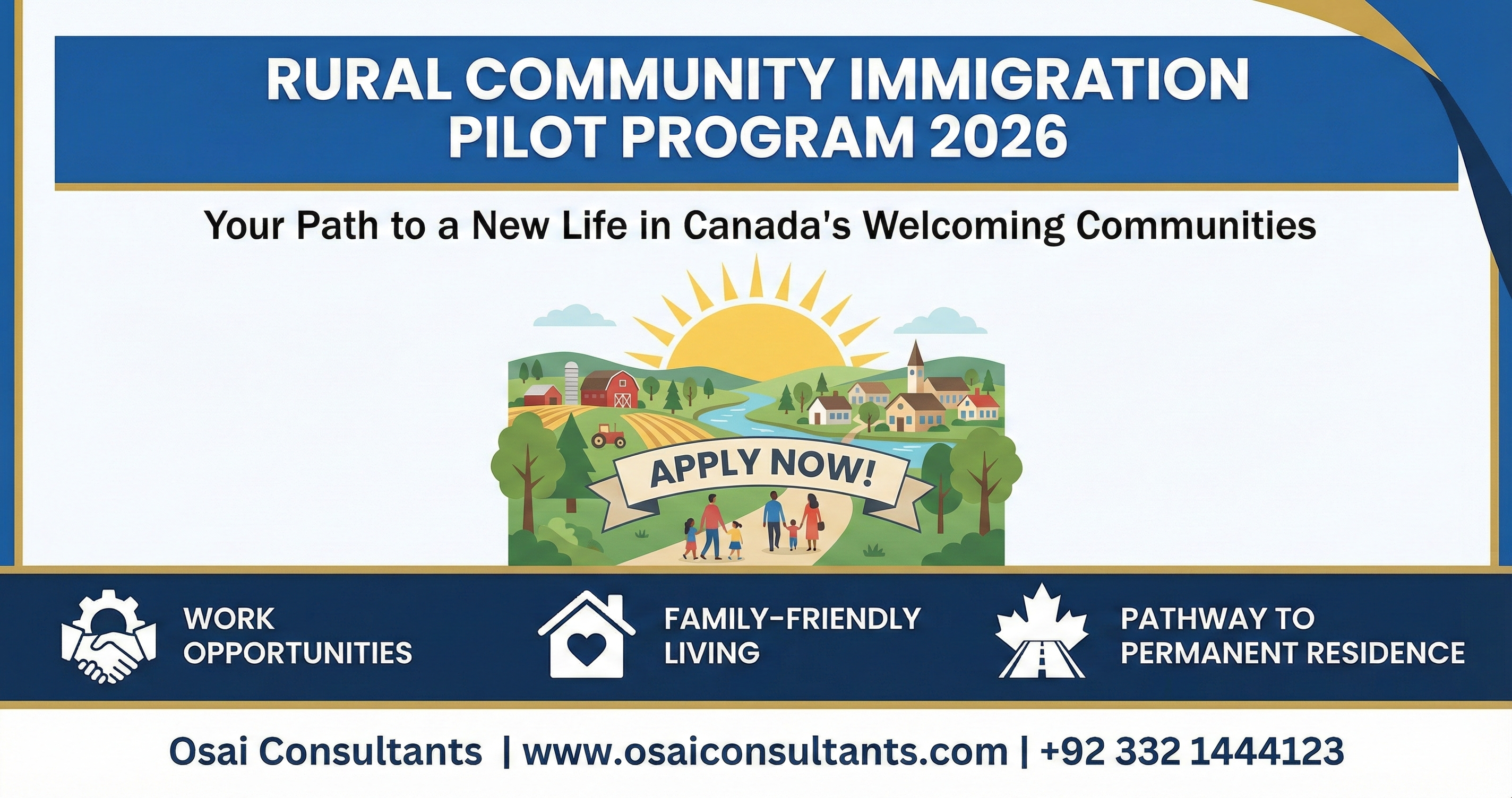
The Rural Community Immigration Pilot (RCIP) is an exciting community-driven pathway designed to spread the benefits of economic immigration to Canada’s smaller, rural areas. By connecting skilled foreign workers with designated employers in participating communities, the RCIP offers a direct and often faster route to Canadian Permanent Residence.
Launched in 2025 as the successor to the highly successful Rural and Northern Immigration Pilot (RNIP), the RCIP focuses on addressing local labor shortages while providing newcomers with a supportive, welcoming environment to call home.
Eligibility Requirements for Candidates
To apply for permanent residence through the RCIP, you must meet both the federal (IRCC) requirements and any specific criteria set by the participating community.
1. Valid Job Offer
You must secure a genuine, full-time, and non-seasonal job offer from a designated employer within one of the participating communities. The job must be permanent (indeterminate) and meet the prevailing wage for that occupation in the region.
2. Work Experience
Most candidates must demonstrate at least 1 year (1,560 hours) of continuous, paid work experience within the past 3 years.
- International Graduate Exemption: You may be exempt from the work experience requirement if you graduated from a publicly funded post-secondary institution located within the recommending community (specific rules apply regarding the length of the program and your residence in the community during your studies).
3. Language Proficiency
You must prove your ability in English or French by providing results from an approved language test (such as IELTS, CELPIP, or TEF). The minimum score depends on the TEER category of your job offer:
- TEER 0 & 1: CLB 6
- TEER 2 & 3: CLB 5
- TEER 4 & 5: CLB 4
4. Educational Credentials
You must have at least a Canadian high school diploma or a foreign equivalent.
5. Settlement Funds
Unless you are already working in Canada on a valid work permit, you must prove you have enough money to support yourself and your family as you settle in your new community.
Participating RCIP Communities
As of 2026, several communities across Canada are actively participating in the pilot. Each community manages its own intake periods and may prioritize specific sectors like healthcare, trades, or manufacturing.
- Ontario: North Bay, Sudbury, Timmins, Sault Ste. Marie, Thunder Bay.
- Manitoba: Steinbach, Brandon, Altona/Rhineland.
- Saskatchewan: Moose Jaw.
- Alberta: Claresholm.
- British Columbia: West Kootenay region, North Okanagan-Shuswap, Peace Liard.
- Nova Scotia: Pictou County.
How the Application Process Works
The RCIP follows a unique multi-step process:
- Find a Job: Secure an offer from a designated employer in a participating community.
- Community Recommendation: Apply for a recommendation from the community’s local economic development organization.
- Apply for PR: Once recommended, submit your official application for permanent residence to IRCC.
- Work Permit (Optional): While your PR application is being processed, you may be eligible for a community-supported work permit to start working in Canada sooner.
Start Your Journey with Osai Consultants
The RCIP is a specialized program with unique community-led requirements. Osai Consultants is here to help you identify the best community for your skills, assist with the recommendation process, and ensure your PR application is filed correctly.
📞 Contact us today: +92 332 1444123