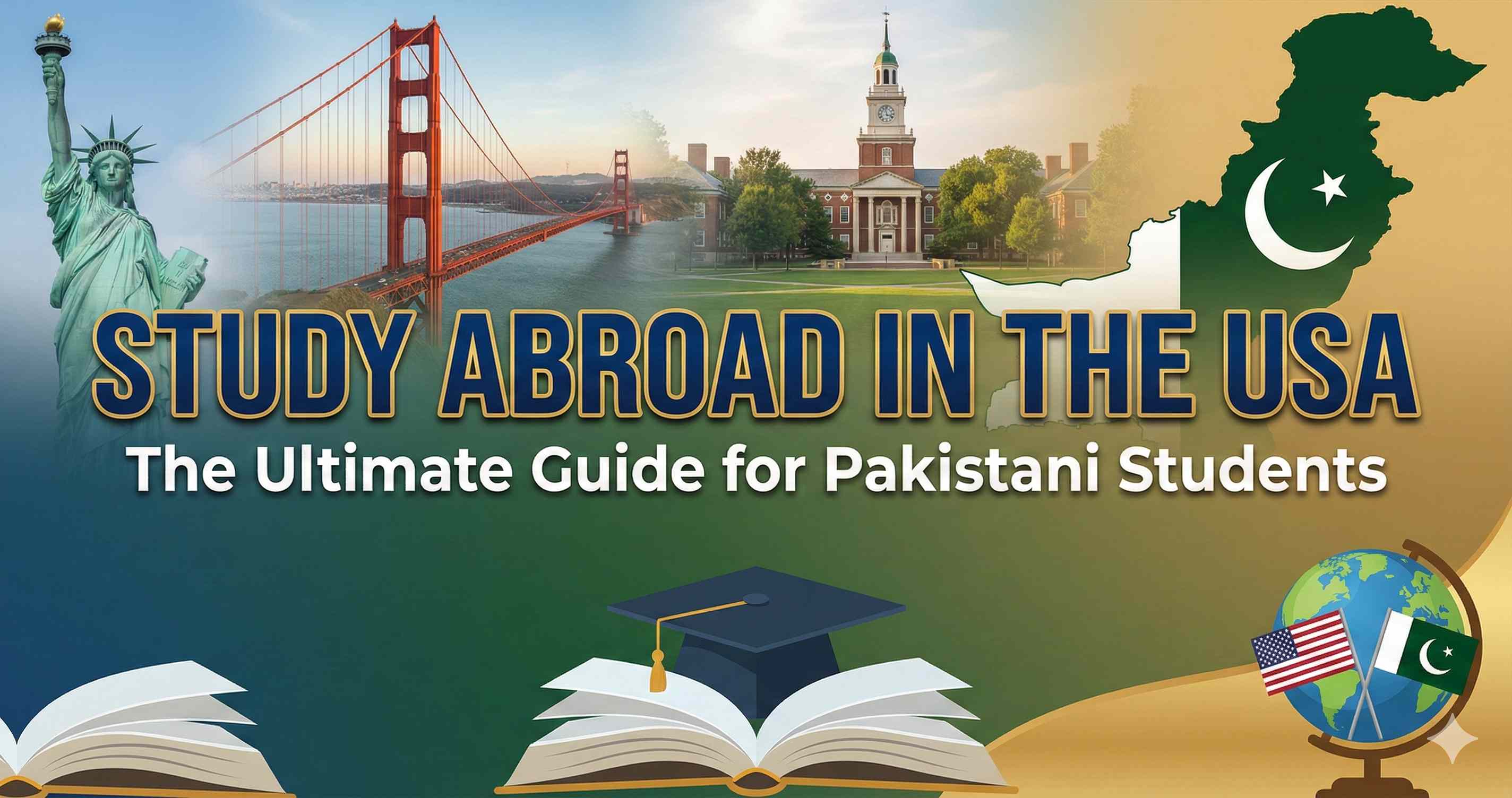
Study Abroad in the USA – The Ultimate Guide for Pakistani Students
- Category:Student Visa
- Country:United States
- View Counts:353
- Published on:15-Feb-2026
Study Abroad in the USA – The Ultimate Guide for Pakistani Students
Studying in the United States is a lifelong dream for many Pakistani students due to its world-class education, research opportunities, multicultural environment, and better career prospects. With over 4,000 colleges and universities offering a wide range of programs, the USA remains a top destination for international education.
1. Why Study in the USA?
The USA is known for:
- High-quality education and research facilities
- Wide range of programs and degrees
- Global recognition of degrees
- Career and internship opportunities
- Cultural exchange and global networks
Organizations like EducationUSA provide FREE advising for Pakistani students about U.S. universities and the application process.
Types of USA Study Visas
International students need a student visa issued by the U.S. Department of State to study in America.
There are three main types of U.S. study visas:
1️⃣ F-1 Visa (Academic Student Visa)
The F-1 visa is the most common visa for Pakistani students.
✔ For students enrolled in:
- Universities & Colleges
- High Schools
- Private Elementary Schools
- English Language Programs
✔ Required document: Form I-20 (issued by your university)
✔ Work rights:
- 20 hours per week (on-campus during semester)
- Full-time during official breaks
- Eligible for CPT & OPT after first academic year
👉 This visa is ideal for Bachelor’s, Master’s, MBA, and PhD students.
2️⃣ M-1 Visa (Vocational Student Visa)
The M-1 visa is for students enrolled in:
- Technical courses
- Vocational programs
- Non-academic training
M-1 students have very limited work options and cannot apply for OPT like F-1 students.
3️⃣ J-1 Visa (Exchange Visitor Visa)
The J-1 visa is for:
- Exchange students
- Research scholars
- Government-funded programs
Programs like the Fulbright Program fall under J-1 category.
Some J-1 students may be subject to a two-year home residency requirement.
Educational Requirements
📘 Bachelor’s Degree (Undergraduate)
✔ Completed FA / FSc / ICS / ICom or equivalent
✔ Strong academic record (GPA varies by university)
✔ SAT or ACT (optional at many universities now)
🎓 Master’s Degree (Graduate)
✔ 4-year Bachelor’s degree from recognized university
✔ GRE or GMAT (required for some programs)
✔ Work experience (for MBA programs)
Always check the specific university’s requirements.
🗣 English Language Requirements
Most universities require proof of English proficiency.
Accepted tests include:
- IELTS
- TOEFL
- Duolingo English Test
- PTE Academic
Minimum score depends on university and program level.
📄 Required Documents
For University Admission
✔ Academic transcripts
✔ Statement of Purpose (SOP)
✔ Letters of Recommendation (LORs)
✔ English test scores
✔ Passport copy
✔ Financial proof
For Visa Application
✔ Valid passport
✔ Form I-20
✔ DS-160 confirmation
✔ SEVIS I-901 fee receipt
✔ Visa fee receipt
✔ Financial documents
The student visa process is managed under the Student and Exchange Visitor Program.
Visa Fees and Other Costs
🎯 Student Visa Fees
✔ F-1 Visa Application Fee: About $160 USD (non-refundable)
✔ SEVIS Fee (I-901): Around $350 USD (for F-1 students)
(You must pay SEVIS before your visa interview.)
💡 SEVIS = Student and Exchange Visitor Information System — mandatory for international students.
💸 Tuition & Living Costs (Estimate)
Depending on the university and city:
Type
Tuition (Annually)
Public University : $14,000 – $28,000
Private University :$7,000 - $28,000
Community Colleges : Lower range
💡 Monthly living expenses usually range between $500 – $1,500+ USD depending on location.
🎓 What You Can Do On a Study Visa (F-1)
🧑💼 Work Opportunities
- On-Campus Work: You are allowed to work up to 20 hours per week during academic term.
- During Breaks: You can work full-time (40 hours/week) during official school breaks.
- After First Academic Year:
- Curricular Practical Training (CPT) – work related to your course
- Optional Practical Training (OPT) – work experience for up to 12 months (STEM fields may get a 24-month extension)
These jobs help cover expenses and build experience.
🚫 What You Can’t Do on a Student Visa
❌ You cannot work off-campus during your first year without special authorization.
❌ You can’t start your own business under F-1 status.
❌ You must maintain full-time enrollment or risk losing your visa status.
❌ Unauthorized work can lead to visa cancellation.
Staying compliant with these rules is critical to keeping your student status.
Job & Career Opportunities for International Students
📌 While Studying
✔ Library assistant, cafeteria support
✔ Teaching assistantships (especially in graduate programs)
✔ Campus IT or research helper
✔ Tutor or student ambassador programs
📌 After Graduation (Through OPT/CPT)
✔ Internships in your field
✔ Full-time opportunities during OPT
✔ Networking with employers for potential long-term roles
💡 Many companies in fields like tech, business, engineering, healthcare, and finance hire international graduates after OPT. This can even lead to work visas like H-1B.
🧠 Visa Interview – Tips & Requirements
The U.S. student visa interview is a key part of your application process. You must:
✔ Attend the scheduled appointment
✔ Bring all required documents with you
✔ Be prepared to explain your study plans (why this course, why this university)
✔ Show that you intend to return to Pakistan after studies
✔ Show strong financial proof
Due to recent changes, most student visa applicants now must attend an interview with fewer exemptions than in past years (visa interview waivers have significantly reduced).
🎯 Scholarships & Financial Aid Options
Pakistani students can explore scholarships including:
🎓 Fulbright Program (for Masters & PhD)
🎓 University-specific merit scholarships
🎓 Need-based aid & grants
🎓 External awards & fellowships
Always check deadlines early and apply well in advance.
🎯 Final Advice for Pakistani Students
✔ Start preparation 8–12 months before intake
✔ Apply to multiple universities
✔ Keep financial documents ready
✔ Practice mock visa interviews
✔ Maintain genuine study intentions
Studying in the USA is a life-changing opportunity. With proper planning and correct documentation, Pakistani students can build successful international careers.