
Express Entry Draws Explained: How Cut-Off Scores Are Determined
- Category:Immigration News
- Country:Canada
- View Counts:530
- Published on:16-Feb-2026
Express Entry Draws Explained: How Cut-Off Scores Are Determined
Many Express Entry candidates wonder why the CRS cut-off score changes from one draw to another and whether IRCC decides a specific score before issuing Invitations to Apply (ITAs). The answer is important for anyone planning Canada immigration through Express Entry.
How Express Entry Draws Work
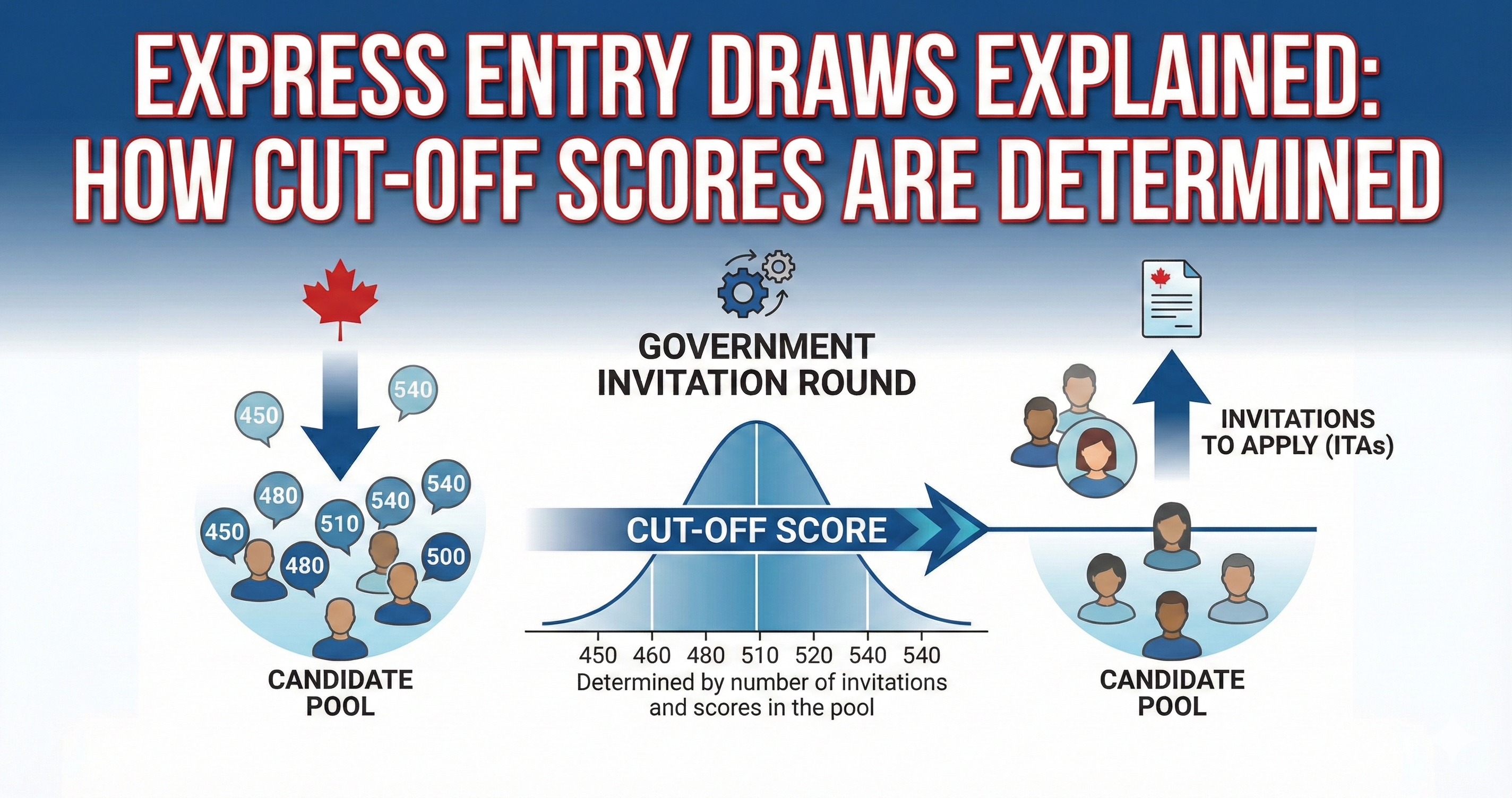
When Immigration, Refugees and Citizenship Canada (IRCC) conducts an Express Entry draw, it establishes the number of ITAs to issue and the type of draw. Draws may be general, program-specific, or category-based. IRCC then selects eligible candidates in descending order of their Comprehensive Ranking System (CRS) scores until the allocated number of invitations is reached.
The CRS cut-off score is therefore an outcome of the draw—not a score IRCC necessarily chooses first. It represents the CRS score of the lowest-ranked candidate who received an ITA in that particular round.
What Is the CRS Score?
Candidates in the Express Entry pool are ranked using the CRS, which considers factors such as:
• Age
• Education
• English or French language ability
• Canadian and foreign work experience
• Other additional CRS factors, including provincial nomination and eligible French-language skills
The higher your CRS score and ranking, the stronger your position may be in an eligible Express Entry draw.
A Simple Example
Imagine a competition where only 1,000 places are available. The organisers select the 1,000 highest-ranked participants. If the 1,000th participant has a score of 485, then 485 becomes the effective cut-off for that round.
The organisers did not necessarily decide that “485” would be the required score beforehand. The score resulted from selecting the highest-ranked eligible candidates.
What Happens When Candidates Have the Same CRS Score?
A tie-breaking rule can apply when multiple candidates have the same CRS score as the lowest-ranked invited candidate. IRCC uses the date and time candidates submitted their Express Entry profiles to determine which profiles fall within the invitation threshold.
Why Can CRS Cut-Offs Rise or Fall?
CRS scores can change because of:
1. Draw size: Larger invitation rounds can reach further down the ranking pool, while smaller rounds may stop at a higher score.
2. Pool composition: New high-scoring candidates entering the pool or existing candidates improving their profiles can affect rankings.
3. Draw type: General, program-specific, PNP and category-based draws target different groups of eligible candidates, so their results can vary.
The Key Takeaway
Instead of trying to predict one exact Express Entry CRS cut-off, candidates should focus on improving their CRS score and strengthening their overall profile.
For professional guidance on Canada immigration, Express Entry eligibility, CRS assessment and other immigration pathways, explore:
OSA Immigration Consultants – Check Your Eligibility
For the latest official Express Entry draw information, eligibility requirements and invitation details, always verify information through:
Government of Canada – Express Entry Rounds of Invitations
Plan your Canada immigration journey with accurate information and a strategy built around your individual profile.