
UK vs Canada for Pakistani Students in 2026: Complete Comparison of Tuition, Living Costs, PR and Visa Success
UK vs Canada for Pakistani Students in 2026: Complete Comparison of Tuition, Living Costs, PR and Visa Success
Studying abroad is one of the most transformative decisions a student can make — but choosing the right destination requires balancing cost, educational quality, work and settlement pathways, lifestyle, and long-term goals.
Two destinations consistently topping Pakistani students’ lists are:

United Kingdom (UK) — famous for its historic universities, globally recognized degrees, and shorter programs.
Canada — celebrated for affordability, inclusive immigration policies, and clear pathways to permanent residency (PR).
This guide explores how both stack up in 2026 so you can choose the right option for your goals and budget.
1. Tuition Comparison
Tuition is one of the biggest upfront costs for international students, and it’s often the first factor families consider.
United Kingdom
The UK generally has higher annual tuition fees for international students, especially at well-ranked universities.
Bachelor’s programs: typically £12,000 — £22,000 per year
Master’s programs: typically £15,000 — £25,000 per year
Medicine/Dentistry: can be much higher (~£25,000–£40,000+)
However, several unique advantages reduce the total cost:
Shorter degree lengths:
Undergraduate degrees: usually 3 years
Master’s programs: often 1 year — saving one year of fees and living costs.
This compressed duration can make the UK surprisingly competitive in overall cost compared to longer programs abroad.
Canada
Canada’s tuition tends to be slightly lower per year, but programs are longer.
Annual tuition: CAD 15,000 — CAD 30,000+ for most undergraduate and postgraduate programs.
Because most bachelor’s degrees are 4 years and master’s degrees are 2 years:
Total tuition costs can equal or exceed UK programs despite lower annual rates.
The cost benefit depends on your city and chosen institution.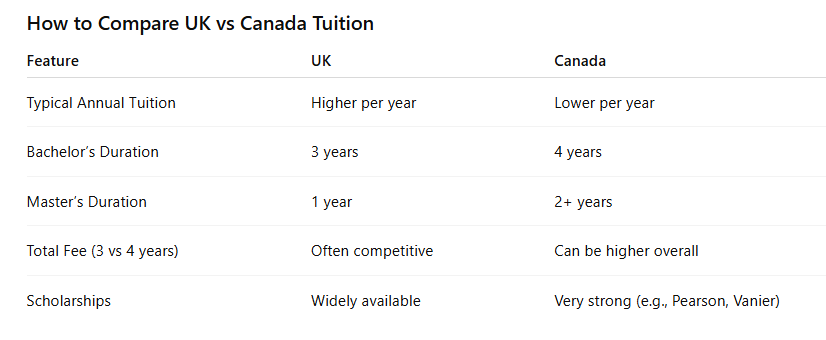
Scholarships and Aid
Both countries offer scholarships to international students — and Pakistani students are eligible for many of them:
UK: Chevening, Commonwealth Scholarships, university-specific awards.
Canada: Vanier Canada Graduate Scholarships, Lester B. Pearson, UBC International Leader of Tomorrow Awards.
💡 Pro tip: Grants, fellowships, and teaching/research assistantships can significantly reduce costs — especially for master’s and PhD programs.
2. Living Cost Comparison
Tuition is just one piece — living expenses (rent, food, transport, utilities) shape your real-world budget.
United Kingdom
Living costs vary widely:
London and Southeast England: very high
Northern cities (e.g., Manchester, Leeds, Sheffield): significantly lower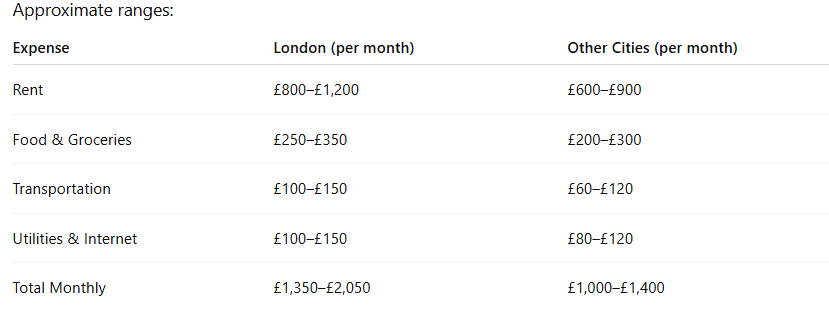
Annual total can easily reach £10,000–£14,000+ depending on lifestyle and location.
Canada
Canada also varies by city, with Toronto and Vancouver on the higher end and smaller cities like Halifax, Calgary, Winnipeg being more affordable.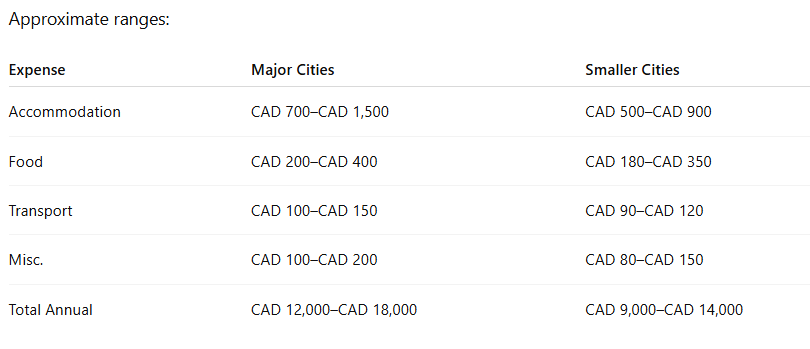
Overall, Canada’s general cost of living is slightly lower or comparable to the UK — especially outside major cities.
Which Has Lower Living Costs?
Canada tends to be more affordable overall if you choose smaller cities.
UK living costs can be very high in London and the Southeast but cheaper in the North.
💡 Tip for Pakistani Students: Monthly budget planning should include rent, food, travel, medical, and entertainment — and seek student housing/community groups to cut costs.
3. Visa Approval Rates
Visa success is a critical concern — no acceptance letter matters if the study visa is refused.
UK Student Visa
The UK generally has a stable student visa process with clear requirements:
Offer letter (CAS)
English proficiency (e.g., IELTS)
Proof of funds to cover tuition and living costs (varies by city)
However, in late 2025–early 2026, some universities tightened recruitment from countries with higher refusal rates, including Pakistan. For example:
Some UK universities temporarily suspended admissions from Pakistan/Bangladesh due to visa refusal concerns.
This reflects tougher scrutiny but doesn’t mean all Pakistani applications are refused — rather that institutions are trying to avoid high refusal percentages.
Canada Study Permit
Canada’s student visa process has historically been considered more welcoming for international students, but approval rates have fluctuated.
According to early 2025 data:
Study permit approval for some categories was reported around ~43% — indicating stricter scrutiny.
This suggests student visas are not guaranteed and require very strong documentation — especially financial proof and ties to home country.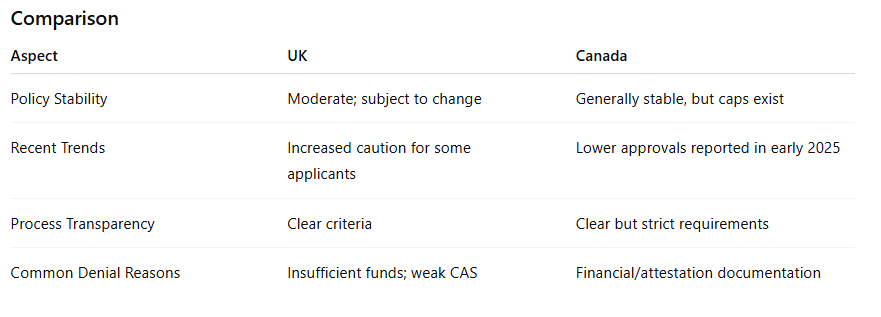
💡 Visa Strategy Tip: Submit strong proof of finances, academic preparedness, and clear educational intentions — these are crucial in both systems.
4. Permanent Residency (PR) Opportunities
If you want to settle after studying, PR pathways differ greatly between the UK and Canada.
United Kingdom
The UK allows a Graduate Route visa:
Usually 2 years for bachelor’s/master’s graduates
3 years for PhD graduates
After that, students must secure a job with a Skilled Worker visa sponsorship to continue living/working. Attaining Indefinite Leave to Remain (ILR) can take several additional years and is competitive.
Recent immigration policy reforms also encourage tighter labor market prioritization for UK nationals — making transitions from student visas to PR less certain than before.
Canada
Canada’s PR system is widely considered more structured and accessible:
Post-Graduation Work Permit (PGWP) allows work for up to 3 years
Work experience gained during PGWP boosts points in Canada’s Express Entry system
Provincial Nominee Programs (PNPs) provide additional PR pathways
For many students, Canada offers a clear timeline to PR within 3–5 years, supported by work experience and provincial incentives.
Which Is Easier? UK or Canada for PR?
Canada: Easier and more predictable PR pathways via Express Entry and PNPs.
UK: More competitive and often slower transition from student visa to ILR.
For students prioritizing long-term settlement, Canada generally offers a stronger, more transparent path.
5. Work Rights While Studying
Earning while studying helps manage expenses and gain work experience.
United Kingdom
Up to 20 hours/week during term.
Full-time during vacations.
Hourly pay varies by city and job type, often £9–£12 per hour.
Canada
Also typically 20 hours/week during term.
Full-time during scheduled breaks.
Hourly wages tend to be higher (CAD 14–CAD 20+) depending on role and location.
⚖️ Key Differences
Canada often offers better hourly wages and more work-to-save potential.
Work experience in Canada is also valued toward PR pathways.
6. Which Country Is Better for Which Student Profile?
There’s no universal answer — the best choice depends on your goals, field, budget, and career plans.
Here’s a practical breakdown:
1) Students Wanting World-Class Education and Fast Degrees
Best Fit: United Kingdom
✅ Prestigious universities (Oxford, Cambridge, UCL, LSE)
✅ 1-year master’s reduces total cost
✅ Strong global reputation
Ideal if you want:
A strong brand name on your CV
Quick entry into the job market
Business, finance, law, or management focus
Considerations:
Higher living costs in major cities
Competitive PR environment
2) Students Prioritizing Long-Term Stay & PR
Best Fit: Canada
✅ PGWP → up to 3 years of work
✅ Express Entry & PNP offer clear PR routes
✅ Greater integration into local job markets
Ideal if you want:
To settle long-term
Work full-time after study
Build a career and life in Canada
3) Budget-Focused Students (Tuition + Living)
Tie — Context Matters
UK can be cheaper overall due to shorter program lengths.
Canada offers lower living costs in many cities, even if duration is longer.
Recommendation:
Examine total cost (tuition + living + visa + insurance) before deciding.
4) Students Studying Tech / Engineering
Either country can be solid, but:
Canada often leads for tech + long-term work pathways.
UK is excellent for specialized, elite programs in tech hubs like London and Cambridge.
5) Students Seeking Research / PhD
Both countries are strong, but:
UK PhDs may be shorter and intensely research-focused.
Canada offers longer research experiences tied to PR points.
Final Verdict: UK vs Canada for Pakistani Students in 2026
There’s no universal “winner” — it depends on your priorities:
Choose the UK if you want:
✔ World-class branding and accelerated degrees
✔ Quick, one-year master’s
✔ A strong global academic reputation
✔ Higher prestige in business/finance environments
Choose Canada if you want:
✔ Affordable living and work opportunities
✔ A clear, faster route to PR
✔ Strong wages while studying
✔ Long-term settlement with family sponsorship potential
📌 Bottom line:
UK excels in education quality + fast degree completion
Canada excels in affordability + work + settlement pathways
Closing Thoughts
Choosing where to study abroad is deeply personal — but by comparing tuition, living costs, work rights, visa pathways, and long-term goals, you can make an informed choice rather than a reactive one.
Whether you choose the UK’s academic prestige or Canada’s welcoming immigration system, planning ahead, preparing strong applications, and matching your choice to your long-term goals will set you up for success.