Global Career & Education Guide 2026: Best Degrees and High-Demand International Job Pathways
Best Degrees and High-Demand International Job Pathways
The global landscape of higher education and professional qualifications is undergoing a major transformation. For the class of 2026, choosing a degree is no longer just an academic pursuit—it’s a strategic investment. In a world driven by rapid technological change, demographic shifts, and a cautious global economy, the right degree signals technical skills, operational fluency, and adaptability to employers seeking predictability over theoretical knowledge.
With global unemployment projected at 4.9% through 2026, opportunities exist—but they are unevenly distributed. International students must therefore select degrees that align with growing global demand while preparing for competitive and dynamic labor markets.

Understanding the 2025-2026 Global Labor Market
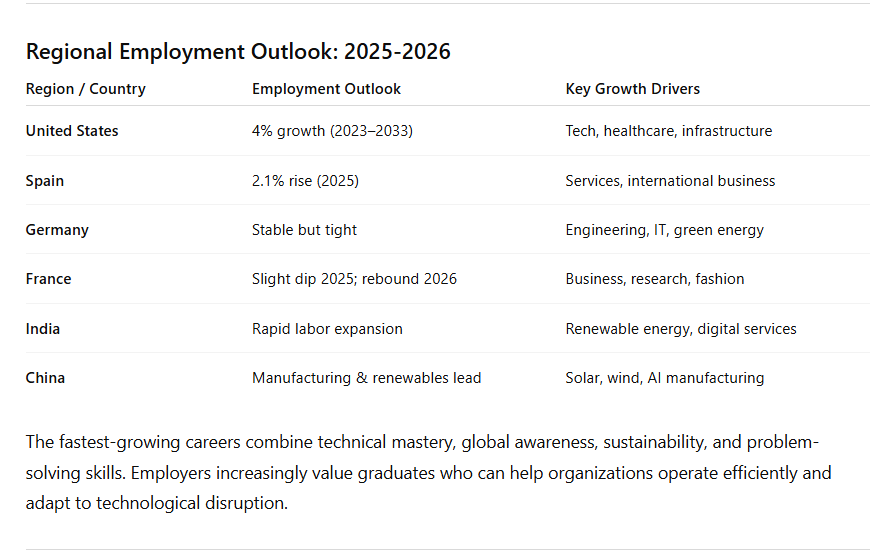
The labor market for 2025-2026 faces a “skills dilemma.” While digital transformation is reshaping industries, job quality growth has stalled. Youth unemployment is especially high at 12.4%, highlighting the challenges for younger workers.
- High-income countries: Aging populations and slower labor growth stabilize unemployment.
- Low-income countries: Rapid labor force expansion risks a missed demographic dividend if structural reforms lag.
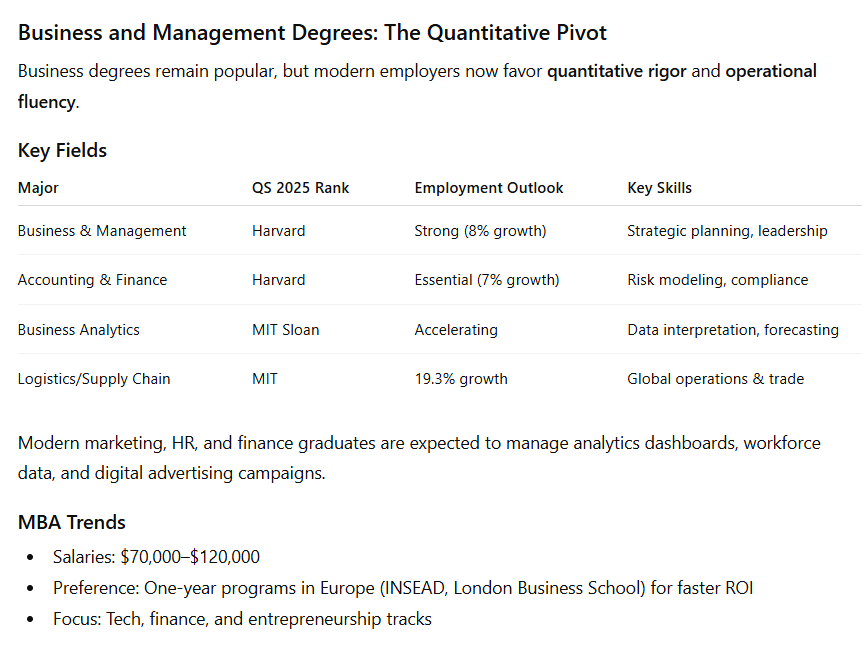
For international students, this means focusing on fields with faster-growing demand than global talent supply. Today, 94% of business leaders report shortages in AI and digital skills, with some reporting gaps exceeding 40%. Degrees that bridge traditional roles and AI-augmented economies are therefore most valuable.
STEM Degrees: Building the Future
Science, Technology, Engineering, and Mathematics (STEM) degrees remain top-ranked for high salaries, global mobility, and career resilience.
Data Science, AI & Computer Science
- Growth: 36% projected through 2033
- Roles: Predictive modeling, AI management, algorithm design
- Median US Salary: ~$136,620
- Leading Institutions: MIT, Stanford (CSAIL at MIT is a global hub for AI research)
Curriculums now emphasize ethics and “digital storytelling” to complement AI-driven workflows.
Engineering: Mechanical, Electrical & Interdisciplinary Focus
- Mechanical Engineering: 6.8–10% growth, median salary $100,000, key sectors: robotics, automation
- Electrical Engineering: 7% growth, median $118,780, focus: smart grids, power systems
- Aerospace Engineering: 6% growth, median $134,830, focus: space tech, defense
- Civil Engineering: 6.8% growth, median $95,000, focus: sustainable infrastructure
- Biomedical Engineering: 5% growth, median $106,950, focus: surgical robotics, imaging
Top universities like ETH Zurich and the University of Oxford emphasize interdisciplinary training combining engineering, data science, and environmental modeling. Germany remains a premier destination for applied STEM studies with strong ties between universities and private sector R&D.
Healthcare and Life Sciences: Resilient Careers
Healthcare remains recession-proof, driven by aging populations and global access expansion.
Nursing & Healthcare Administration
- BSN Salary: ~$86,070; Nurse Practitioner: ~$128,490
- Unemployment: 1.42%
- High-growth fields: Healthcare administration (+28%)
Sustainability and Renewable Energy: Strategic Necessity
Climate risks are accelerating hiring in green energy and sustainability. Renewable energy employment reached 16.6 million in 2024, with China, Germany, the UAE, and the US as top hubs.
- China: Solar/wind manufacturing, power systems
- US: Battery storage, grid automation
- Germany: Green jobs embedded in climate policy
- UAE (Masdar): 8.9% annual growth in green talent
Top universities now offer interdisciplinary masters combining renewable integration, LNG infrastructure, and environmental economics.
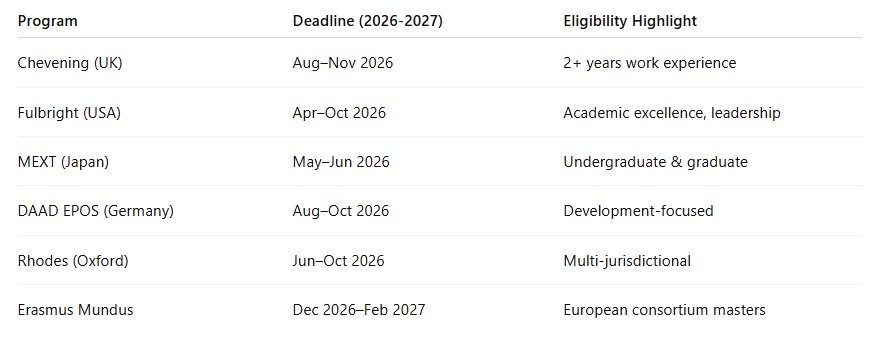
Scholarship Timelines for 2026-2027